


What if the “light on the mountain” isn’t supernatural at all but neurological? Maybe it’s time to consider the science of awe, the biology of ego dissolution, and the ethical responsibility that comes with enlightenment. If transcendence is part of our brain’s wiring, then the main question isn’t whether it’s real. The main question is, “What are we supposed to do with it?”
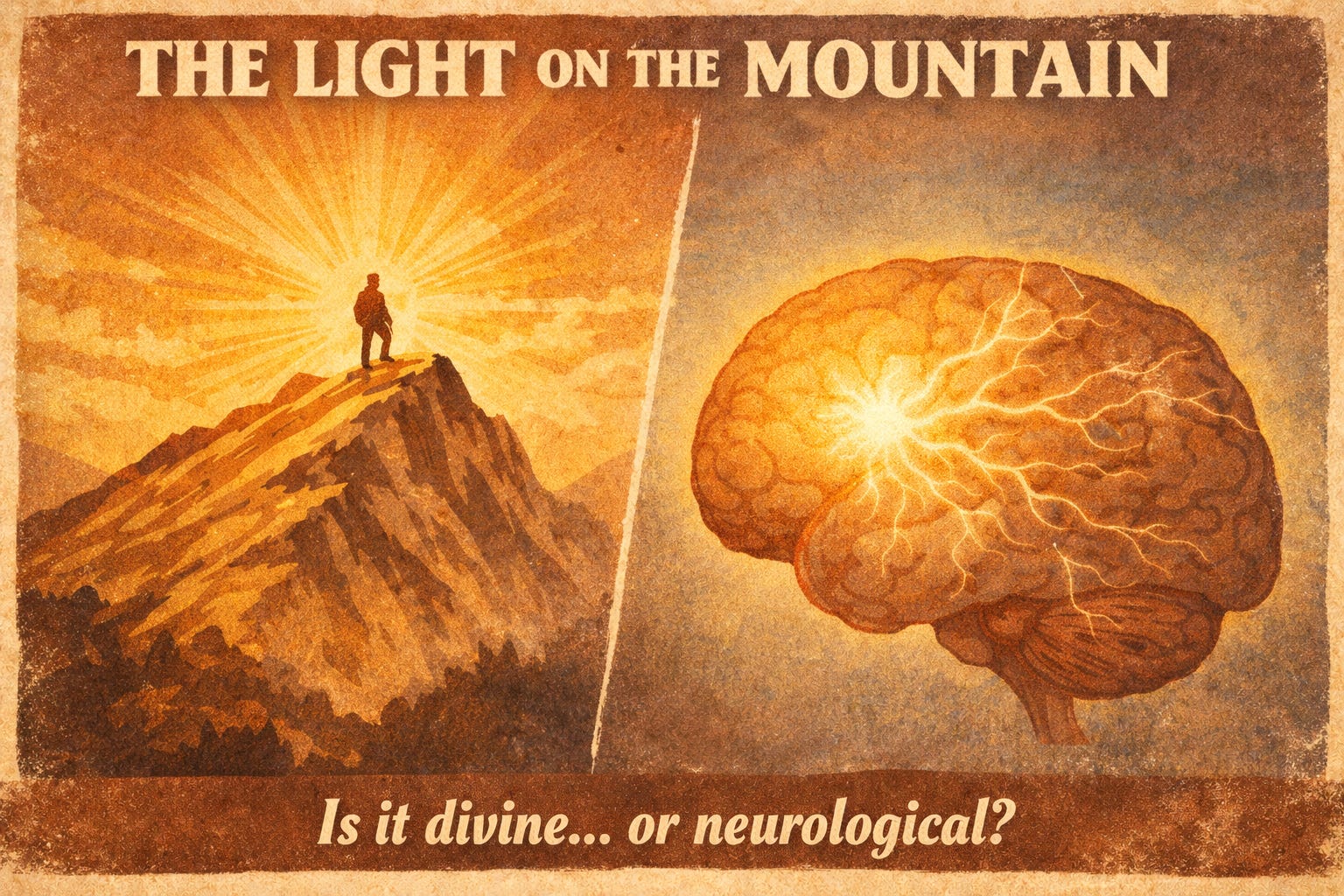
What if I told you that the Transfiguration—the radiant light, the mystical vision, the overwhelming sense of awe—might not be proof of divinity… but proof of something far more fascinating? What if that “mountaintop” moment isn’t a supernatural interruption of nature, but a perfectly natural function of the human brain? And what if understanding that doesn’t make the experience smaller but actually makes it more powerful?
Because here’s the uncomfortable truth: human beings are wired for transcendence. We can trigger it with meditation. With music. With trauma. With psychedelics. With magnetic stimulation of the temporal lobes. We can literally light up the brain and induce the feeling of a “presence.” So the real question isn’t whether the light on the mountain was real. The question is: what does it mean that we carry the capacity for that light inside our own biology?
And here’s where it gets ethically dangerous. If mountaintop experiences are part of our neurological wiring, then chasing them becomes easy. Addictive, even. But the story doesn’t end on the mountain. It always descends into the valley.
In this episode of Afterthoughts, we talk about the science of awe, the illusion of the glowing ego, and the moral responsibility that comes with enlightenment. Because if you’ve seen the light, you don’t get to keep it for yourself!


