


Christmas didn’t appear fully formed from heaven, it was built slowly, layer by layer, from ancient festivals, political strategy, and our shared human longing for light in dark times. In this episode, we peel back the mythology to uncover the real origins of Christmas and explore why understanding its human roots actually makes the season more meaningful!
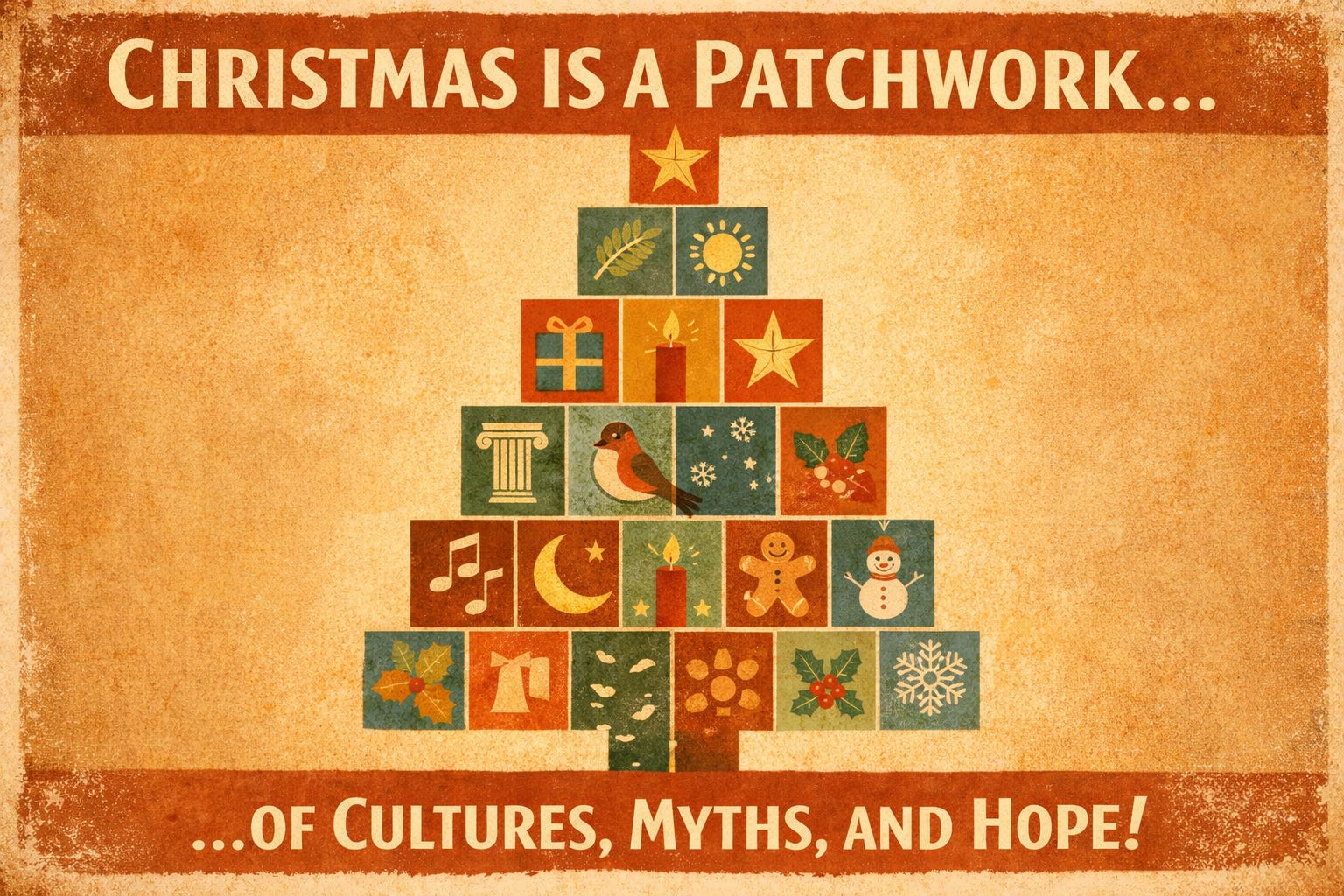
Now… let’s talk about Christmas. Not the sentimental Hallmark version, not the “baby Jesus glowing softly in a manger” version, and not even the “capitalism in a Santa suit” version. I mean the real origins of Christmas, where it actually came from, how it was assembled piece by piece, and why it looks the way it does today.
Because here’s the truth: Christmas did not begin the way most people think it did. The early Christians weren’t sitting around saying, “Let’s celebrate Jesus’ birthday every December 25th!” In fact, for the first couple centuries of Christianity, nobody cared about Jesus’ birthday at all. It wasn’t even on the radar. The crucifixion and resurrection were everything. The birth stories were late additions—mythic, symbolic, written to make theological points, not historical ones.
And yet here we are, centuries later, with a massive global holiday built on these stories, wrapped in lights, decorated with trees, and fueled by enough sugar to power a small nation-state.
So what happened?
How did this incredibly complex holiday get built?
And why is it such a beautiful, bizarre, and deeply human mosaic of traditions?
So, let’s dive into that… in this episode of Afterthoughts!


