


Progress isn’t automatic. Every generation must sort inherited ideas, keeping what promotes human flourishing and discarding what causes harm.
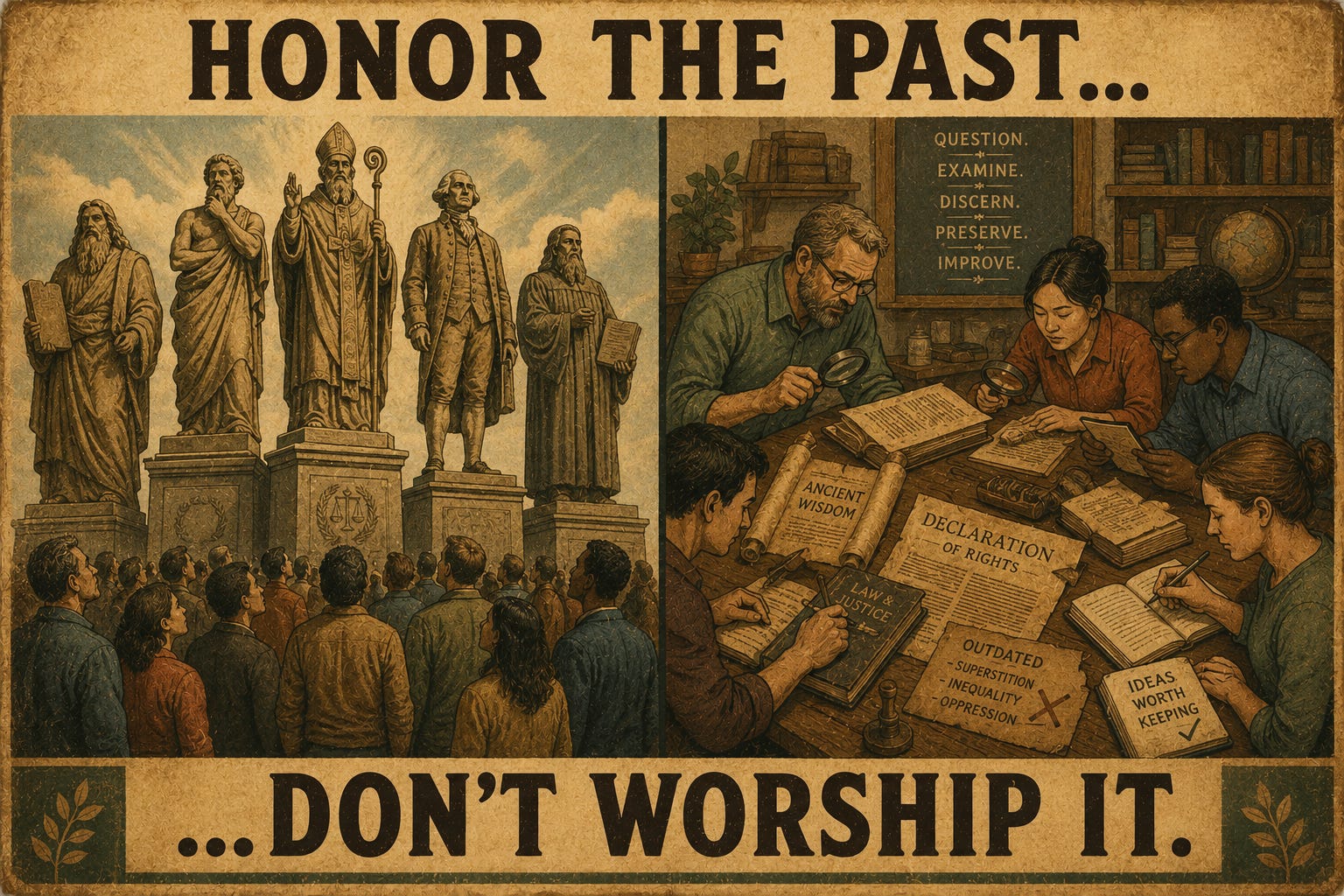
One of Jesus’ shortest parables—and one with some of the darkest imagery he allegedly shared—turns out to be a powerful metaphor for moral progress, if we look at it through a more humanistic lens. When we do that, we find ourselves asking what it really means to sort through the ideas we’ve inherited, and we realize that the work of sorting those ideas is work that belongs to every generation!
Imagine cleaning out your parents’ attic. You’d probably find family photographs, handwritten letters, treasured keepsakes, and maybe a few antiques worth preserving. But you’d also find broken appliances, outdated gadgets, worn-out furniture, and things nobody has used in decades. You wouldn’t keep everything simply because it belonged to your ancestors. You’d sort through it, preserving what still has value… and you’d let go of those things that no longer serve anyone.
The strange thing is, we’re usually much better at doing that with old possessions than we are with old ideas. Whether we’re talking about sacred scriptures, national traditions, political philosophies, or family beliefs, we often assume that age alone gives them authority. But history doesn’t work like that. Every generation inherits a tangled collection of wisdom and mistakes, compassion and prejudice, brilliance and blind spots. The real question isn’t whether we should honor the past, it’s whether we have the courage to separate what still nourishes humanity from what should finally be left behind!


