

What if hope doesn’t require belief in the supernatural? Historically, religions have “fabricated” hope and resilience through promises of divine reward, but we can consciously build the same psychological strength using biology, reframing, and community. And honestly, if there’s no cosmic safety net, then our resilience isn’t weaker. It’s stronger because it’s forged in reality, not conjured up by magical thinking. And that makes it a lot sturdier than religionsists care to admit!
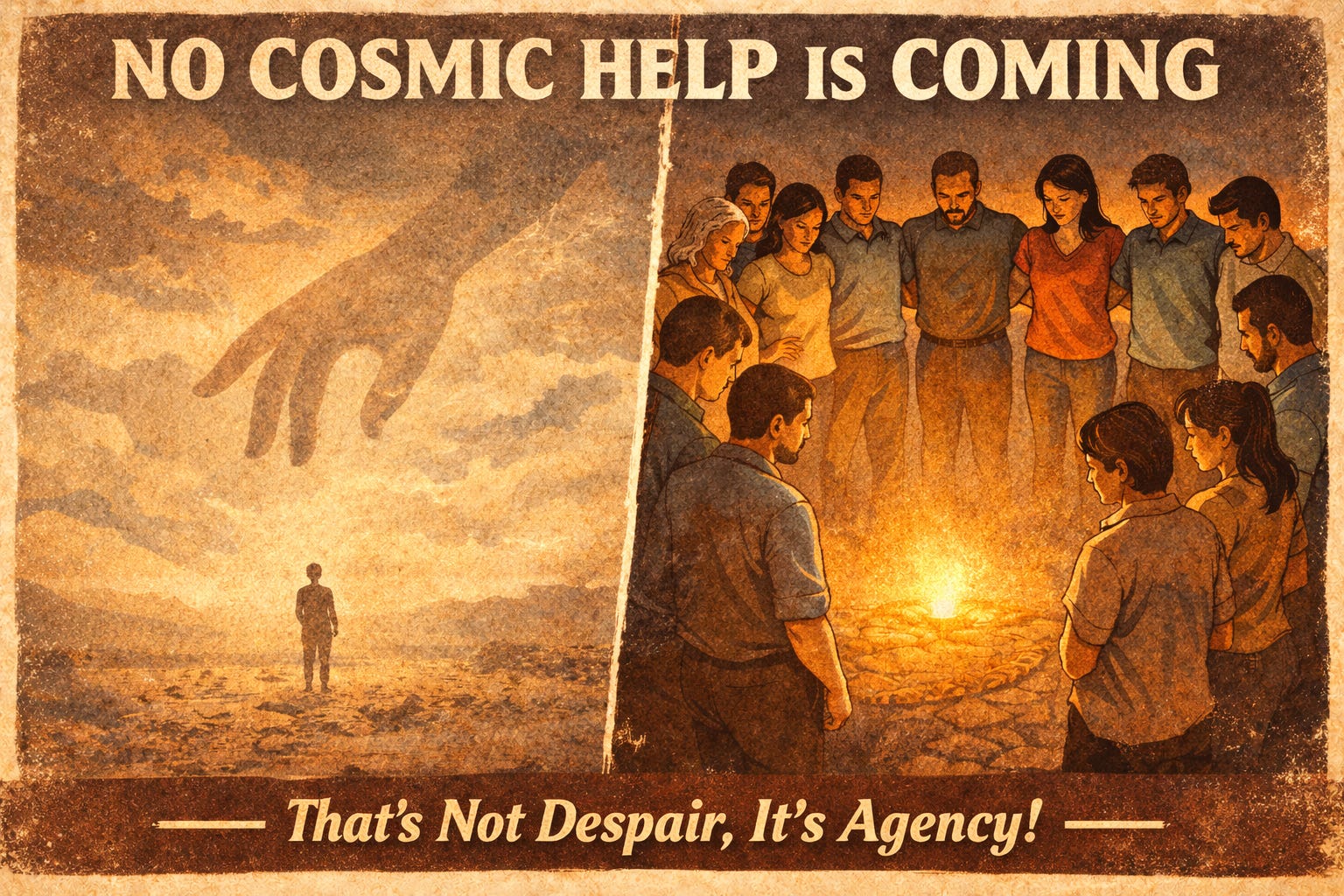
When life falls apart for a humanist, there is no cosmic project manager who is tracking everything and knows what’s going on. No divine author polishing the rough draft, preparing to give you a better life script. Sometimes the diagnosis is just bad luck. Sometimes the drought is just climate. Sometimes the job loss is just corporate restructuring. No plan. No script. No cosmic safety net.
And that can lead to something psychologists call learned helplessness, which is the feeling that nothing you do matters.
So here’s the thesis for this episode of Afterthoughts: We don’t need a plan from above to have hope. But we do need the psychological technology that religion used to provide.
In this episode of Afterthoughts, we’re going to hack the benefits of faith using biology, reframing, and community. No divine editing required.


