


Resilience helps us recover from adversity. But when broken systems depend on our endless endurance, maybe it's the system, not the person, that needs fixing.
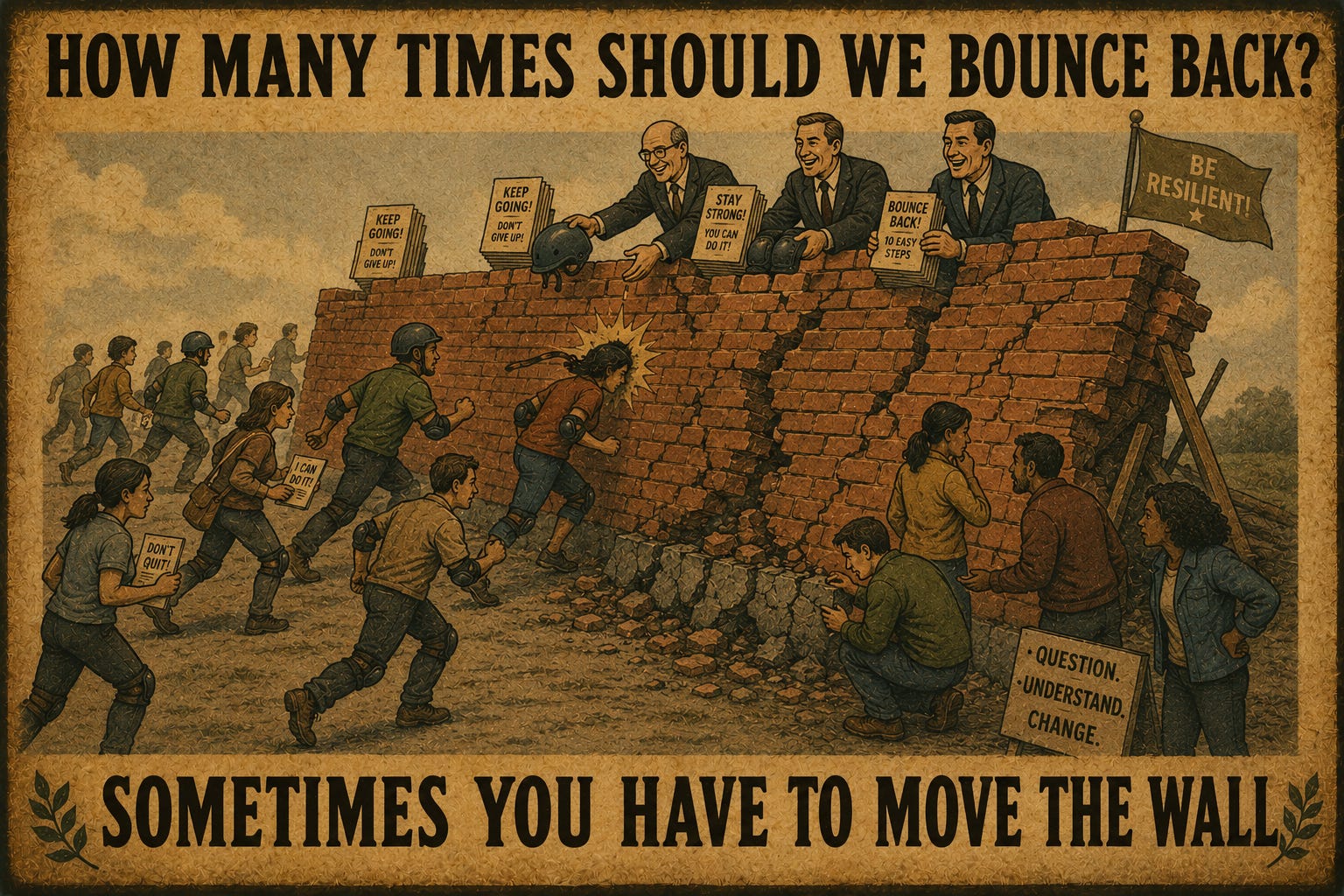
We’re constantly being told to become more resilient. Burned out at work? Build resilience. Struggling financially? Become more adaptable. Your community gets hammered by another crisis? Look how resilient everyone is! And resilience really is valuable. We need the ability to recover from grief, failure, uncertainty, and all the adversity that life inevitably throws our way. But somewhere along the line, we turned a healthy capacity to recover into an expectation that people should simply keep absorbing damage.
Let’s call this the Resilience Myth: when systemic failures get redefined as personal deficiencies, and instead of fixing the conditions that are hurting people, we teach people how to endure them more efficiently. Sometimes resilience really does mean bouncing back. But sometimes it means refusing to keep bouncing off the same damn wall. How do we know the difference? And what would happen if we stopped trying to make people unbreakable and started building systems that didn’t keep breaking them in the first place?
So, let’s dive into that… in this episode of Afterthoughts!


