

The Bible evolved through centuries of adaptation and reinterpretation. So how did a changing tradition become an argument against changing our minds?
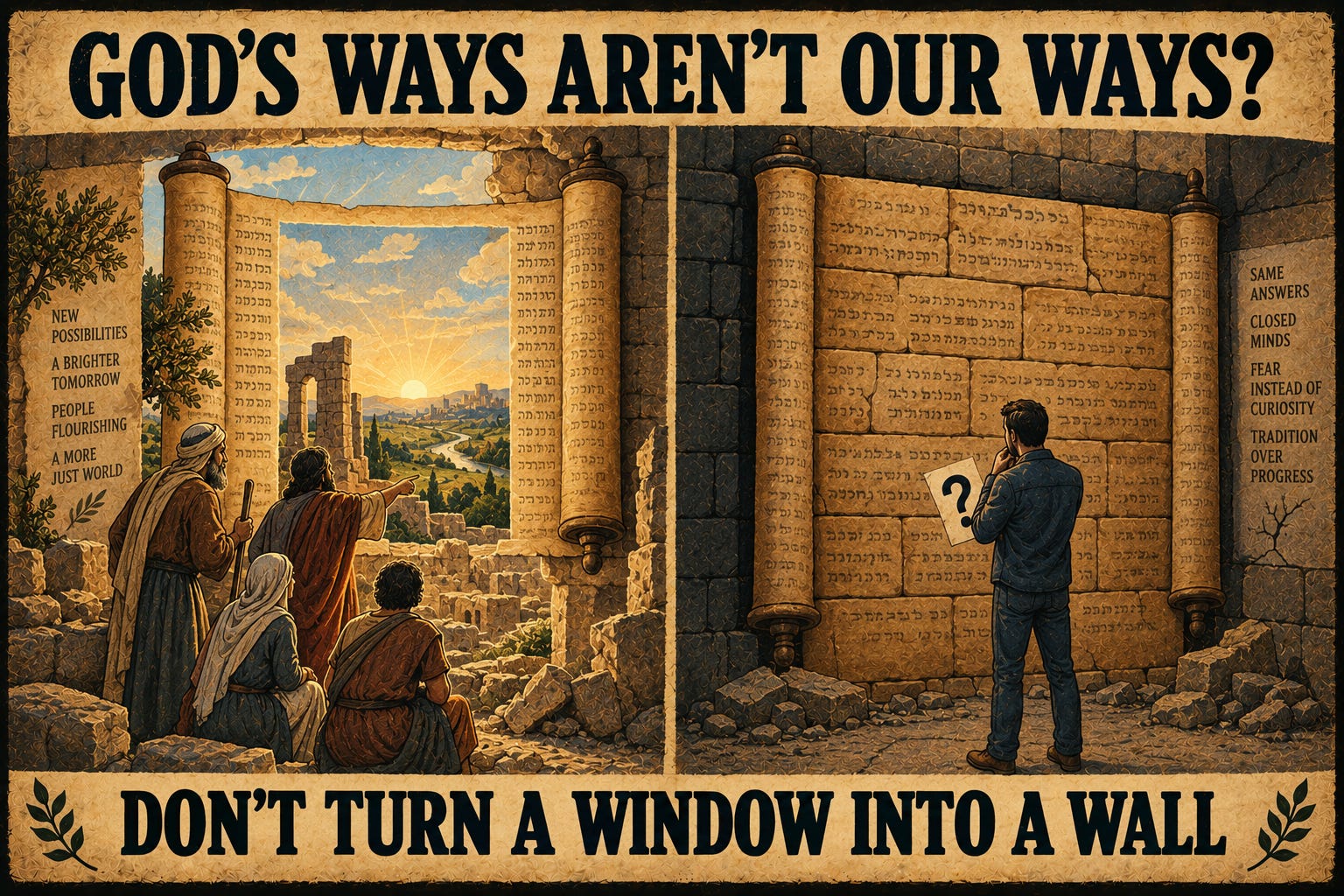
There’s a wonderfully convenient escape hatch available whenever a religious belief stops making sense: God’s ways aren’t our ways. Ask why an all-powerful God permits something horrible, question an ancient moral rule, or point out a theological contradiction, and Isaiah 55 can suddenly appear like a divine Get Out of Logic Free card. We’re human. God knows better. Stop asking questions.
But there’s a delicious irony hiding behind that argument. The Bible itself wasn’t created by people who simply preserved an unchanging collection of ideas exactly as they received them. Its writers and editors lived through wars, exile, political upheaval, and cultural change—and they repeatedly interpreted, adapted, expanded, and reworked their traditions in response. So how did texts created through a remarkably dynamic human process eventually become arguments against changing our own thinking?
So, let’s dive into that… in this episode of Afterthoughts!


