


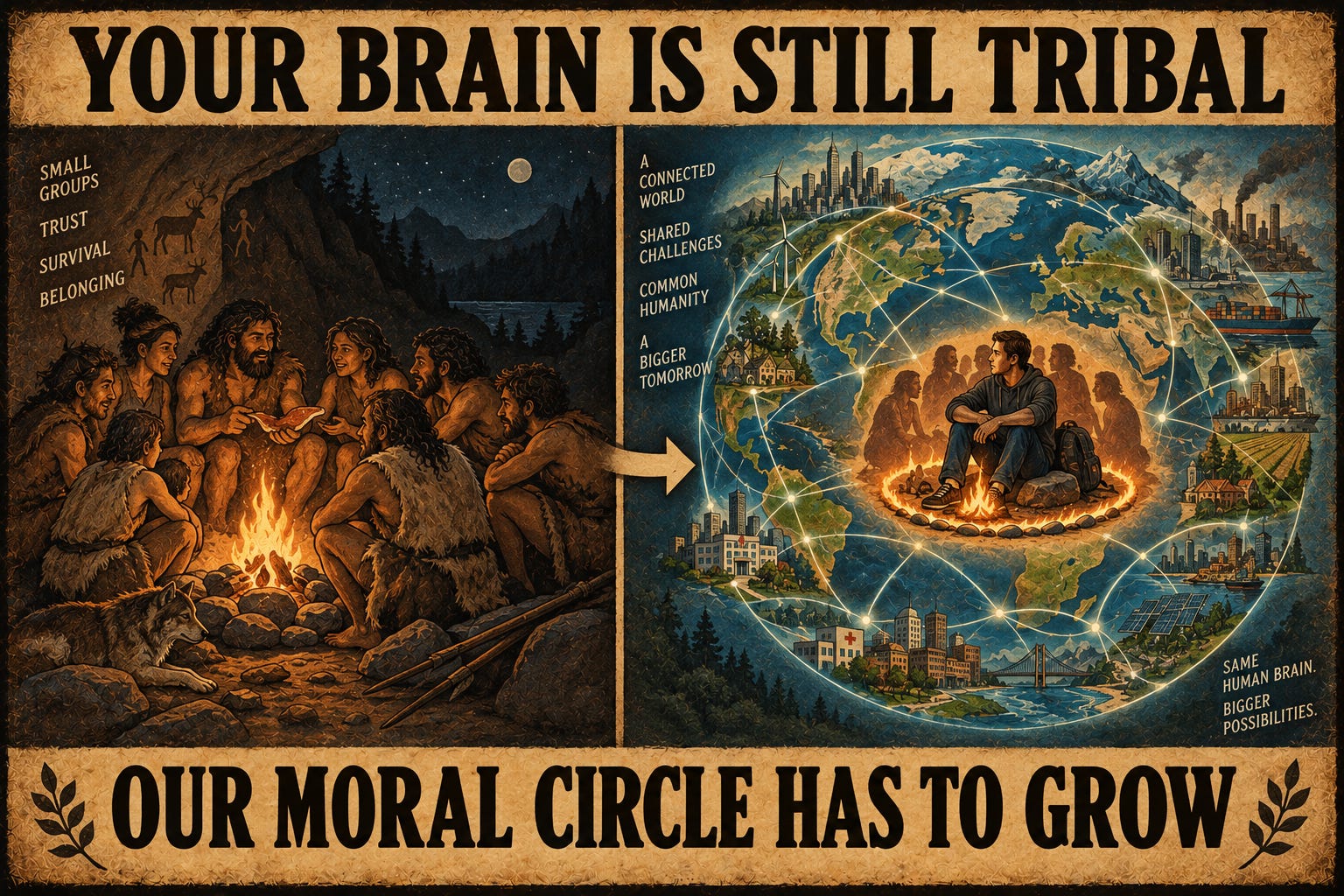
Our brains evolved for small tribes, but our problems are global. Social mastery means deliberately expanding our moral circle beyond our natural one.
Paul’s statement in our reading from Romans this week, that “none of us lives for oneself”, is something that sounds almost tailor-made for the modern world. Climate change, pandemics, global supply chains, economic inequality, migration, war… we now have overwhelming evidence that what happens to people thousands of miles away can eventually affect people sitting at our own kitchen tables. For perhaps the first time in human history, we can actually see just how interconnected we are.
There’s just one problem: our brains weren’t built for this world. Human social cognition developed in relatively small communities where cooperation meant dealing with people we actually knew, while outsiders were a lot easier to distrust or ignore. Today, we’re asking those same brains to care about eight billion people, and then we’re surprised when we retreat into political tribes, national borders, and online echo chambers. What if becoming a genuinely global citizen isn’t something that comes naturally at all but a skill we have to deliberately learn and practice?
So, let’s dive into that… in this BONUS episode of Afterthoughts!


