


Why do healthy ecosystems need weeds? Discover how biology exposes the hidden danger of ideological purity and why resilience requires diversity.
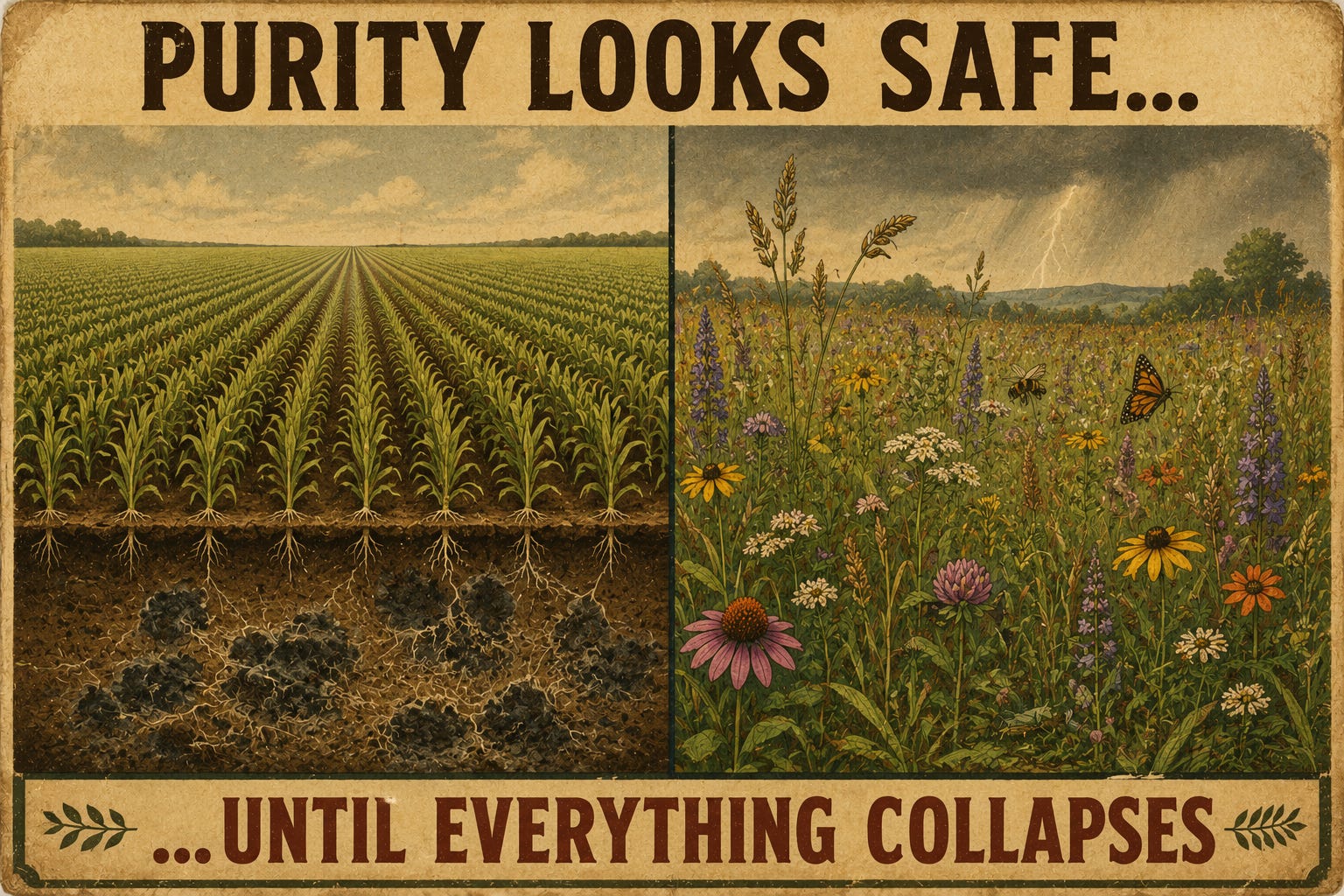
There’s something deeply satisfying about a perfectly manicured lawn. No weeds. No dandelions. Every blade of grass standing at attention like it’s reporting for military inspection. We tend to think that’s what health looks like—not just in our gardens, but everywhere else. We want perfectly unified political movements, perfectly disciplined organizations, perfectly orthodox churches, and perfectly rational activist groups. If someone doesn’t fit, the instinct is simple: pull the weed.
It feels like strength. It feels like progress. After all, who wants a messy garden?
The problem with an immaculate garden is that nature doesn’t actually work that way.
A field with no diversity, no competing plants, and no ecological friction may look beautiful for a while, but beneath the surface it’s becoming dangerously fragile. Remove every challenge, eliminate every disturbance, and you’ve also removed many of the very forces that help living systems adapt and survive. The cleanest field can become the easiest one to destroy.
Human communities aren’t all that different. The moment a group becomes obsessed with ideological purity—whether it’s religious, political, or even secular—it starts confusing agreement with health. Disagreement becomes disloyalty. Questions become threats. Before long, the goal isn’t discovering what’s true. The goal is protecting the group from anyone who might complicate the story.
So, let’s dive into that… in this episode of Afterthoughts!


